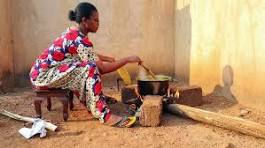
“An African Woman Must Cook”
“An African woman must cook in her home,” my aunt emphasized, her voice rising just slightly, but enough to signal that this was not a statement to be questioned. We were shelling peas in the backyard, under the avocado tree. It was one of those hot afternoons in Limuru, where the sun presses gently but insistently against your back, and the air smells of earth, firewood, and the lingering scent of mangoes.
I looked up from my bowl, startled, the sun catching the glint of her gold tooth as she spoke. My instinct was to defend myself, to tell her how times had changed. But I had known her long enough to realize there was no winning a debate when her voice reached that tone. So, I nodded politely. “Yes, auntie,” I replied.
Inside, though, I felt the stirrings of defiance. I had other beliefs — strong ones — about what a modern home looked like. I envisioned a life different from the ones lived by my mother, my aunties, and the generations before me. I didn’t want to be confined to the kitchen, slaving away over pots and pans, while everyone else laughed in the living room. I was educated and so, empowered. I thought to myself I was better suited being part of the conversations, discussing politics and sports. I wanted to talk about important things, like why the government was a mirror of how we, as Kenyans, were inherently corrupt or discuss why there was never enough money to complete road projects. Did my uncles and the men know that Faith Kipyegon had just tried to run a mile under four minutes?
But here I was, in the kitchen, like them, hating every minute of it, while making sure the boiling githeri had enough firewood and drunk from my endless mug of ‘dubia’, sugarless but rich in milk. I listened to the endless village gossip, which young woman had recently had a baby and which family had recently lost a member. My grandmother would be busy keeping a mind record of the updates so that she can visit each person the next day with the right information and colloquialism. All unnecessary “intrusion” if you asked me.
My high school boyfriend at the time had agreed with me, or at least he had pretended to. We were still caught in the thrill of young new love, where even disagreements were cushioned by affection and compromise. I remember telling him how I didn’t intend to cook every day, and that I preferred ordering food, trying new cuisines, tasting the world from the comfort of our future couch. He had nodded and laughed, pulling me into a hug, and I took that as confirmation. I felt liberated.
In those days, I imagined our weekends would be spent sampling Thai food, indulging in lazy sushi nights, and celebrating pizza Sundays. The Nairobi, I thought of then, would be cosmopolitan enough to support these dreams. I dreamt of access to — quaint, old, and upcoming restaurants in the neighborhood that would offer takeout. It didn’t occur to me then that most Kenyan eateries didn’t cook food from other countries. Still, in my young heart, I believed that the life I saw in the movies and read in novels — modern, carefree, and romantic — would be my reality.
Back then, I also dreamt of moving abroad. I would get a scholarship to study liberal arts, maybe in Canada or Norway, live in Oslo or Montreal. I would major in literature and become a professor. I saw myself living in a small, quiet town with cobbled streets and an old bookstore I’d frequent on Sundays. I imagined snow softly falling on my window as I read Toni Morrison and Maya Angelou by the fireplace. I would wear wool socks, sip hot cocoa, and occasionally teach spirited university students about the feminist theory and African literature. Mine would be a full university lecture room, standing at the bottom with the projector casting a shadow of my beautiful African figure, I would answer question of curious white people on our heritage, values, work ethic and how inherent pride in being African. They wouldn’t get the irony of how far I had run from that life, but they would appreciate the authentic voice telling them all the real stories.
In this dream, my home would smell of cinnamon and baked bread. I would host game nights with my colleagues, knit Christmas socks, and hang them over the chimney. We would laugh and sing carols, drink mulled wine, and make macaroni and cheese in the oven — just like in the movies.
I had the whole vision laid out.
But life has a way of tilting dreams or adjusting life to a reality that should be!
I didn’t move abroad then. I didn’t get the scholarship. Instead, I was accepted into a local university and pursued a science-based course, I was going to be a nurse practitioner. I held on to the dream though, hoping that one day, I would get lucky and leave to practice at least in Europe. Afterall, nurses were always leaving for greener pastures.
My parents celebrated. I was the first in our family to enroll in university and was studying something important. My mother ensured to highlight the importance of women in health care, how it made it easier for other women to express themselves when they found a fellow woman in a health facility. It did not make sense to me why she was telling me this. My aunt, the same one who insisted I learn how to cook, gave me a jiko and a sufuria set for campus. “You’ll need this,” she said. I smiled, biting my tongue.
In campus, I met the man who would later become my husband. He was focused, kind, and practical — not the type to write poetry under a tree, but the kind who’d fix a broken tap and still call you "my love" over dinner. He didn’t ask me to cook, at first. He respected my space, admired my ambition. He indulged my love for instant black coffee and morning runs at the crack of dawn. Sometimes, he would even act as my pacesetter. I was practicing for a western life.
Eventually though, as we got serious, I noticed things shift. He liked chapati, made by jiko. He liked stew made a certain way, with carrots, peas and potatoes cut just so. He loved tea brewed with fresh ginger, not the instant or flavored kind. He woke up and went to provide, always came home with something to eat while staying focused on his studies.
When we got married and moved into our first apartment in Nairobi, I insisted on buying a microwave and a blender before anything else. I told myself I could still live my version of a modern life. I cooked occasionally — mostly when I missed home food. But I held on tightly to the idea that cooking every day was old-fashioned, unnecessary. I was still trying to prove something, perhaps to my aunt, perhaps to myself. I stocked my fridge with frozen meals, done over a weekend meal prep. I ordered food and endlessly complained of the quality and the delays. And, sometimes, I found myself pulling out the same jiko from under the bed to boil bone soup and sweet potatoes.
Then I had my first child.
It was a girl. The labor was long and tiring, and when I finally held her, I cried more out of relief than joy. I was exhausted. The nurses really came through for me. They walked and sang with me and when the contractures intensified, threatening to take me out, they helped me through the breathing. They were kind and made the journey feel familiar and known, and I only made it because they were there. The labour had taken all shame from me, naked and shameless, they had dignified me, shown me grace and protected me.
The night I was discharged, my mother-in-law arrived with her youngest daughter in tow. They brought hot uji, bananas, nduma (arrow roots) and milk tea in a flask. My husband was confused — he thought they’d just visit and leave. But they stayed. His mum ignored him and focused on me. She fed me, let me sleep in, cleaned and ensured my house was in order.
She stayed for a week.
I wasn’t allowed to do anything — not even bathe the baby. They pampered me, prayed with me, tucked me in bed, and told me stories of how women needed to rest to regain their strength and protect the baby’s spirit. I had never felt so taken care of. My sister-in-law remained behind for another three months, helping me with laundry, cooking, and childcare.
I realized then how deep and powerful our traditions were. A visit from the in laws after childbirth was warranted. They were the ones who laid the foundation of what parenting would look like in the proper African way. The practice made me appreciate that our traditions weren’t chains — they were safety nets. This period stayed with me, and I grew so much through it.
Years passed. And finally, our applications to migrate went through. My husband and I were both working now as nurses, he, a trained ICU nurse and I, a theatre circulating nurse. After months of paperwork, we relocated to the UK. It was cold, thrilling, and terrifying all at once. We landed in November. I remember the air smelling of rain and cigarette smoke.
At first, I was excited. I ordered all the food I had dreamt of. Thai, Japanese, Chinese, Greek. But something was off. The food tasted sterile, rushed — cooked without the kind of love that comes from a grandmother’s kitchen. The love affair was short, and did not meet the expectations. We missed Sukuma and ugali, missed the rich, fatty taste of boiled bone soup, missed the rhythm of home. I, even missed the bloody African sausage- mutura.
Shopping was a painful experience that I dreaded.
Back in Kenya, I realized, food was intimate. It had rhythm. On Saturdays, I would walk to the market and greet mama mboga as she carefully stacked her kale, tomatoes, and passion fruits. There was warmth in bargaining, in asking about her children while she selected the best mangoes for me. I never realized how healing those simple rituals were—until they disappeared.
In Europe, the supermarket was cold. The shelves were full, yet I always felt like there was nothing to eat. The vegetables looked pale, lifeless, wrapped in plastic and branded with names I could barely pronounce. I stood in those aisles—overwhelmed, confused, and slightly ashamed. Avocados, once a common pleasure back home, were now €2.50 each. Small, unripe, and rock-hard. I laughed out loud the first time I saw the price. Not out of joy—but in disbelief. I used to pick them from the compound in Limuru for free. Here, they were a luxury item. Like many things I had once taken for granted.
I tried, at first, to hold on to the comfort of home. I scoured the ethnic stores for maize flour, but it was overpriced and often expired. I attempted to cook ugali and greens with wilted spinach and tasteless tomatoes. I made chapatis once, but the dough refused to rise the way it did back home. Even the water felt different. There was something about the smell, the texture, the air—it all resisted me. The meals came out wrong, and my heart broke a little more each time. After a while, I stopped trying.
Our lives were tightly wound in work. Long, unforgiving hours at jobs we were lucky to get but ashamed to keep. I was no longer a nurse. Here, I worked as a home care assistant, on my feet for twelve hours, often pushing heavy wheelchairs and helping clients up the stairs. I had to have a job that allowed me to juggle motherhood and making money. And so, a friend, also with young kids recommended me as a caregiver. This way, we could schedule our shifts in a way that one of us was home with the kids.
My husband also quit healthcare to make ends meet and took night shifts at a warehouse, stacking boxes far heavier than anyone should. We barely saw each other. When we did, we were too tired to cook, too worn to think. We relied on whatever was fast, filling, and cheap. Pastries. White bread. Baked beans from a can. Some nights, we shared a takeaway burger and slept like stones.
At first, it felt like adaptation. But slowly, our bodies began to protest.
I gained weight steadily. Subtly. My jeans stopped fitting. I was always tired. Then my knees began to ache—first a dull pain, then a persistent stiffness that made getting out of bed feel like climbing a hill. I was 34. How could I already be talking about arthritis?
I dismissed it at first. But at my community church, I began hearing similar stories. My Kenyan counterparts like Alice, who used to dance at every wedding, now walked with a limp. Kamau, a tall, once-fit man from Embu, was diagnosed with high blood pressure and pre-diabetes. We were all carrying extra weight. We were all tired, sore, and silently worried.
We didn’t talk about it much. Not then. Because health, we believed, was a matter of personal responsibility. So, when things started going wrong, we blamed ourselves.
But slowly, I began to see the bigger picture.
It wasn’t just about what we were eating—it was about what we could eat. The neighborhood we lived in had no fresh market, no green grocers, no culturally familiar food shops unless we travelled across town. The affordable supermarkets were stocked with processed, calorie-dense foods—things that could stay on shelves for months. Things that filled the stomach but did nothing for the body. I learned later that this was called a “food desert.” A place where fresh, affordable, and nutritious food was hard to access. It sounded like something out of a report, but it was our daily reality.
We weren’t lazy. We were exhausted. We weren’t ignorant. We were overwhelmed. The long shifts, the late buses, the language barriers, the pressure to send money home, the mental toll of racism and being “othered”—all of it was weight. It bore down on our joints, on our minds, on our choices.
Healthcare was another story. Booking appointments felt like navigating a foreign system blindfolded. You needed referrals, addresses, ID cards. Sometimes you needed time off work, which meant unpaid hours or risking your job. Even when we did get through, the doctors often didn’t understand our concerns. “Maybe you should lose weight,” one told me, without asking how I lived. Without understanding that “healthy eating” was not just about willpower—it was about access. Culture. Context.
Looking back, I see now how the social determinants of health wove silently through our lives: Our income decided what we could afford to eat. Our work schedules took away our time to cook or rest. Our environment limited our food options. Our immigration status and cultural displacement meant we were isolated, unsupported, and mistrustful of unfamiliar systems and the stress of survival kept our bodies in a constant state of tension and fatigue.
We had not moved to Europe to get sick. But the system we found ourselves in—while offering opportunity—was not built with us in mind. It rewarded speed over nourishment, convenience over culture, survival over wellness.
And so, in the silence of night, eating canned food on a sofa far from home, I realized: health isn’t just what you eat or how often you exercise. It’s about your environment. Your support system. Your ability to live with dignity. And when those things are stripped away, your body tells the story—through pain, through weight, through weariness.
My second-born, a son, had arrived four years into our stay. I had a few months of paid maternity leave, and then it was back to work. Childcare was a nightmare. There was no family around. No one to bring porridge. No sister-in-law to vacuum the floor or hold the baby while I showered. Consequently, it was all too much. I had to leave work to take care of the kids. Between the preschooler and the infant, add on the housework and grocery shopping on a budget, I was having a hell of a time.
We thought of daycare but couldn’t afford it. We thought of hiring a nanny but shock on us, this was not Kenya where such cheap labour was readily available. When I visited or called the bureaus, they thought I was applying to be the nanny. An African family, immigrants, hiring a nanny was inconceivable, and hence difficult. And did I already say expensive.
I cried almost every day. I was inconsolable.
Eventually, I did the unthinkable. I sent my children back to Kenya. My mother-in-law took them in. We got her a smart phone and relied on the more tech savvy auntie to the kids to send us clips of their day to day. She had her own life though and moved out a year after the kids arrived. Soon, the videos and photos were less and sometimes we would go for weeks without hearing any word. Two years, three years, four years... it was heartbreaking. The dream tasted like ash in my mouth, and I drove both of us crazy with the longing to reunite our family.
In Europe, I learned the true meaning of loneliness. It was more than being alone. It was the compounded emotional weight, of physical weariness, and the lack of someone walking in and just asking, “kuna chai?”
We talked, my husband and I. Many long nights. About going back. About what we’d gained and what we’d lost.
He laughed one night when I confessed that I now hated winter. I told him how knitting was overrated — I had tried, endlessly, to make a scarf, but all I ever produced was a lopsided washcloth. There was always something wrong with my pattern. An extra stitch here, a missed loop there.
“You wanted to live like a character in a novel,” he teased, nudging me on the couch. “Now look at you, craving mukimo.”
We laughed. But it wasn’t bitter laughter. It was the laughter of people who had learned, through experience, what really mattered.
And so, after fifteen years abroad, we came back home.
Now, I sit on my patio — yes, I have a patio — sipping tea, the kind brewed with fresh ginger and a touch of cardamom. My children, now young adults, burst into the kitchen every Sunday, asking what’s for lunch. I love preparing meals for them. Not every day. But enough to make them feel loved.
I still order food sometimes. And I’ve taught them how to make pancakes and avocado toast. We still have pizza Sundays. But we also make chapati together. I show them how to roll it just thin enough, how to press it into the pan, how to watch for the bubbles.
I am not a slave in the kitchen. I am a woman. An African mother. A host. A nurturer.
And next month, I will be visiting my sister-in-law. She’s just had her first child. I’ve already packed my kiondo with maize, millet flour, and dried fish. I’ll carry a few herbs too — the ones good for postpartum healing. I’m going to teach her what my aunt tried to teach me years ago.
Not that an African woman must cook.
But that food is love. That community is strength. And that womanhood — African womanhood — is not about sacrifice alone, but about weaving love into the ordinary, and finding joy in the sacred rhythms of care.
Leave a Comment
Your email address will not be published. Required fields marked *