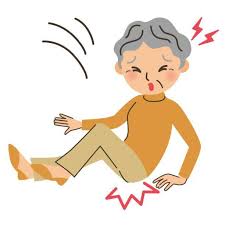
Falling is not something we usually associate with adulthood. Past the age of five, it stops being innocent. When an adult falls, it’s as if time itself pauses—a moment packed with gasps, fears, and a flood of what-ifs. This isn’t just a physical slip; it’s a shock that ripples into every corner of a person’s life and even reshapes their story. For a clinician, a fall isn’t just a small accident; it’s a vital clue. We look at the “why” and the “how,” understanding that, more often than not, falling is a warning that demands our attention.
The Subtle Power of the Fall
Sometimes a fall can be a simple misstep—a slip on a wet floor, a missed footing on uneven ground. But more often, it tells a deeper story. A fall can reveal more than a moment’s imbalance; it can be the sign of something lurking below the surface. It could hint at impaired cognitive function, an untreated condition, side effects of medications, or the gradual weakening of bones and muscles. In those few seconds of descent, a fall becomes a spotlight exposing vulnerabilities we can’t ignore.
Case Study 1: Falls in Older Adults
One of my patients—a priest in his 80s—was no stranger to the demands of mobility. His days were spent on his feet, moving briskly through his duties with no need for a cane. But then, he fell, and his world changed. He broke his hip, and in an instant, he went from the swift-moving caretaker of his community to a man grappling with his own limits. Surgery came next, a total hip replacement, and with it, the long, often daunting journey of rehabilitation.
The Journey of Recovery: Rebuilding his strength wasn’t just physical; it was a mental transformation. We started with cautious exercises, following strict hip precautions to avoid further injury. Each movement had to be deliberate, careful. Slowly, he regained his footing, literally and figuratively. Balance exercises became his lifeline to the independence he once took for granted. Day by day, we chipped away at his fear of falling again, restoring his faith in his own body.
Case Study 2: The Amputee and the Phantom Fall
Another patient, a woman who had lost a limb to diabetes, faced her own battle with falling. Losing a leg was one thing; losing the sense of her body’s boundaries was another. She experienced phantom limb sensation—a haunting perception that her missing leg was still there, still hers. One night, that phantom betrayed her. She got up from her bed, placed weight on a leg that no longer existed, and fell. It was a fall rooted not in carelessness but in her own mind’s struggle to accept her new reality.
Rehabilitation and Recalibration: After her fall, her fear of another accident was intense. To guide her, I had to address both her physical and mental recovery. We worked on grounding her perception, reminding her brain that the leg was gone, that her balance had to be rebuilt anew. Every session was more than exercise; it was a recalibration, a relearning of her body’s new limits and potentials. With every successful step, her confidence grew, and her fear of falling faded, one hard-earned balance drill at a time.
The Stakes of Falling
Falls are more than mishaps. For older adults, they are often harbingers of larger health declines. A fall can set off a cycle of fear and physical deconditioning, where the fear of falling keeps patients from moving, which in turn weakens them and makes future falls more likely. Breaking this cycle is crucial but also challenging—it requires an approach that understands both the body’s limits and the mind’s fears.
Lessons in Recovery and Resilience
- Every Fall Is a Clue: Clinicians must go beyond the immediate cause and ask why. What risk factors were in play? Is there a greater, unseen issue at hand? Each fall is an invitation to dive deeper.
- Psychological Recovery Is Key: For many, falling instills a deep fear. This fear, left unchecked, can trap patients in a cycle of inactivity and decline. Confidence-building is as essential as muscle-building.
- Balance and Trust Are Vital: Balance isn’t just about the body; it’s about trust—trust in oneself, in the ability to move and stay safe. Rehabilitation isn’t complete until patients can walk without the shadow of fear behind them.
- Communication as Therapy: For a physiotherapist, clear and empathetic communication can be as important as the exercises themselves. Knowing when to reassure and when to challenge, when to push and when to pause, is what makes recovery possible.
Conclusion: The Fall and the Rise
For every patient who falls, there is a battle to regain what was lost in that moment of descent. Rehabilitation is not simply restoring movement; it’s reclaiming independence, reshaping the mind’s perception of what’s possible. As a clinician, I stand in awe of the strength it takes to rise again, and I am grateful for the role I play in helping them find their way back to solid ground.
What do you remember about your last fall?
Have you seen someone fall recently and how did it make you feel?
Leave a Comment
Your email address will not be published. Required fields marked *